
Gambling Addiction Help Australia
Understanding Gambling Addiction Help in Australia
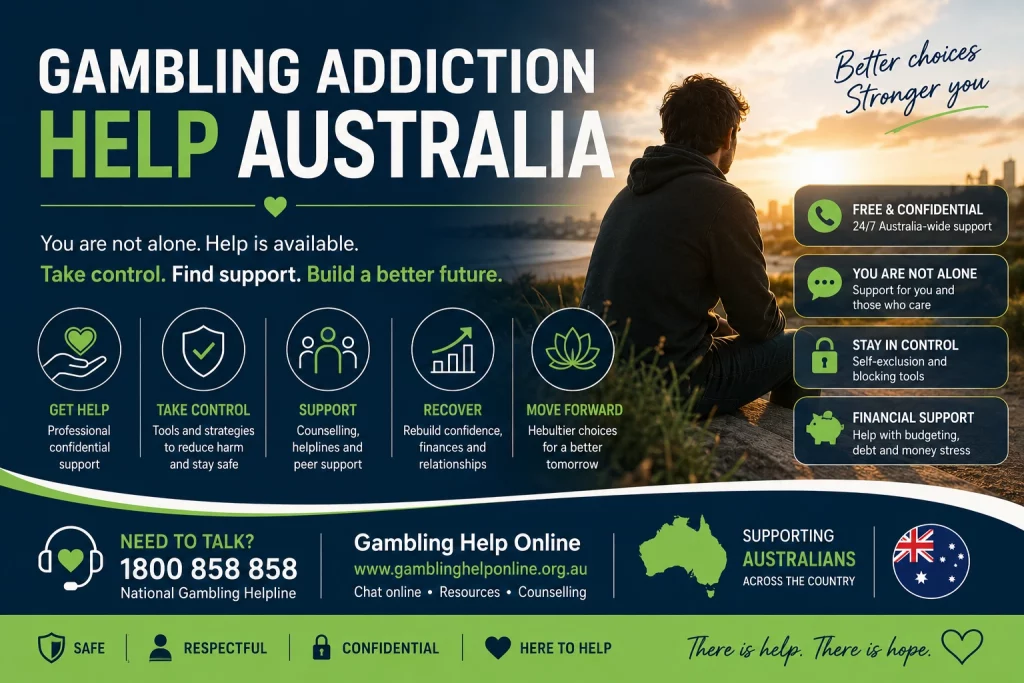
Gambling addiction help in Australia is designed for people who feel that gambling is becoming difficult to control, stressful, secretive, or financially harmful. A person does not need to reach a crisis before asking for support. Early help can prevent gambling harm from becoming more serious and can make it easier to rebuild control over money, time, mood, and daily routine.
Gambling harm can affect people in different ways. For some, the first sign is financial pressure. For others, it is emotional stress, secrecy, arguments, sleep problems, or repeated thoughts about gambling. A person may still work, study, and maintain normal responsibilities while privately struggling with urges to gamble. This is why gambling addiction is not always obvious from the outside.
In Australia, gambling support focuses on practical recovery, not judgement. The goal is to help people pause, understand their behaviour, reduce access, protect money, and get professional guidance where needed. Support may include counselling, self-exclusion, financial advice, blocking tools, family support, and structured recovery planning.
When Gambling Becomes a Problem
Gambling becomes a problem when it stops being controlled entertainment and starts creating pressure. This may happen when someone spends more than planned, plays longer than expected, borrows money, hides activity, or tries to win back losses. A clear warning sign is when gambling continues even after it causes stress.
Chasing losses is one of the most common harmful patterns. This happens when a person keeps gambling because they want to recover money already lost. The emotional logic feels urgent, but the risk becomes higher. Each new bet can create more pressure, especially when the person believes that one win will fix the situation.
Another sign is gambling as an emotional escape. If someone gambles because they feel lonely, anxious, bored, angry, or overwhelmed, gambling can become a coping mechanism. This is risky because the activity becomes linked to mood regulation rather than entertainment.
A useful first step is to review account activity after Login and look at deposits, session length, withdrawals, and repeated behaviour. The purpose is not to create shame. The purpose is to see whether gambling is still occasional and affordable or whether it has become frequent, emotional, and difficult to stop.
| Warning Sign | What It May Indicate | Recommended First Action |
|---|---|---|
| Chasing losses | The person is gambling to recover money emotionally | Stop the session and contact a support service |
| Hiding gambling activity | Shame, pressure, or loss of control may be present | Talk to a trusted person or counsellor |
| Borrowing money to gamble | Gambling is affecting financial safety | Pause gambling access and seek financial counselling |
| Failed attempts to stop | Personal limits may not be enough alone | Use self-exclusion and professional support |
| Gambling to manage stress | Gambling is being used as emotional relief | Replace gambling with safer coping strategies |
Why Early Support Is Important
Early support matters because gambling harm often grows gradually. A person may first increase deposits slightly, then extend sessions, then hide losses, then borrow money or use credit. The earlier the pattern is interrupted, the easier it is to protect finances and relationships.
Some people avoid help because they feel embarrassed. This delay can make the situation worse. Gambling support services are designed to deal with these problems directly and confidentially. A person can ask for advice even if they are unsure whether their gambling is “serious enough.”
Support is also available for family members and friends. Gambling harm can affect households through money pressure, mistrust, conflict, and emotional exhaustion. People close to the gambler may need guidance on how to set boundaries, start conversations, and protect shared finances.
Promotions, Apps and Access Triggers
People trying to reduce gambling should be careful with promotional triggers. A Bonus can encourage continued gambling, especially when wagering terms create pressure to keep playing. If someone already feels out of control, promotional offers should be ignored rather than treated as value.
Creating another account through Sign up is also risky for anyone trying to stop or reduce gambling. New accounts can weaken existing limits and make self-exclusion less effective. The safer step is to block access, use exclusion tools, and speak with support.
Mobile gambling can increase risk because access is immediate. Removing a gambling App, blocking notifications, and avoiding saved payment methods can reduce automatic behaviour. A person who gambles impulsively should make access slower and harder, not faster.
Support Options in Australia
Australia has several support pathways for gambling harm. Some services provide counselling. Others focus on self-exclusion, financial advice, or information about safer gambling. The right option depends on the situation, but the most important step is to start.
| Australian Support Resource | What It Helps With | Official Link |
|---|---|---|
| Gambling Help Online | Free confidential gambling support and counselling information | Visit Gambling Help Online |
| National Gambling Helpline | Phone support for people affected by gambling harm | Call 1800 858 858 via Gambling Help Online |
| BetStop | National self-exclusion from licensed Australian online wagering services | Visit BetStop |
| MoneySmart | Budgeting, debt guidance, and financial wellbeing information | Visit MoneySmart |
| ACMA Online Gambling Information | Information about illegal online gambling services and consumer protection | Visit ACMA Online Gambling |
What to Do First
The first step is to stop adding money. If gambling is causing stress, do not make another deposit to “fix” the result. The second step is to create distance. This can mean logging out, deleting gambling apps, blocking payments, setting device restrictions, or asking a trusted person to help protect access.
The third step is to speak with someone. This could be a counsellor, helpline adviser, family member, friend, or financial counsellor. Gambling harm becomes harder to manage when it remains private. A conversation can reduce pressure and create a practical plan.
People who feel unable to stop should consider self-exclusion. This is not a punishment. It is a protection tool. Self-exclusion removes access while the person works on recovery, budgeting, and emotional stability.
Gambling addiction help in Australia is most effective when action happens early. If gambling feels urgent, secretive, unaffordable, or emotionally heavy, support is already appropriate. The safest decision is to pause gambling, reduce access, and get practical help before the harm increases.
Understanding the Recovery Process
Recovery from gambling harm is not usually a single decision. It is a process that takes time, patience, and consistent action. Some people stop gambling immediately and never return. Others reduce their gambling gradually while using support services, exclusion tools, and financial controls. There is no single recovery path that works for everyone.
The most important thing is recognising that recovery focuses on behaviour, not only on money. Many people believe that if they recover financial losses, the problem disappears. In reality, gambling harm often involves habits, emotional triggers, routines, and thought patterns that need attention even after finances improve.
A person who has experienced gambling harm should focus on building stability rather than chasing quick solutions. Small improvements made consistently are usually more effective than dramatic changes that are difficult to maintain.
Identifying Personal Gambling Triggers
Every person has different gambling triggers. Some gamble when they are stressed. Others gamble when they are bored, lonely, excited, or frustrated. Identifying these triggers helps reduce risk because it allows the person to intervene before gambling begins.
Common triggers include:
- Financial pressure
- Relationship conflict
- Work-related stress
- Social isolation
- Alcohol consumption
- Sporting events
- Advertising exposure
- Easy access to gambling platforms
Understanding triggers allows people to replace gambling with healthier responses. For example, a person who gambles because of boredom may benefit from exercise, hobbies, social activities, or structured daily routines.
A useful exercise is keeping a gambling journal. Recording mood, time, location, spending, and reasons for gambling can reveal patterns that are not immediately obvious.
| Common Trigger | Potential Impact | Healthier Alternative |
|---|---|---|
| Stress | Impulsive gambling decisions | Exercise, relaxation techniques, counselling |
| Boredom | Frequent gambling sessions | Hobbies, social activities, learning |
| Loneliness | Using gambling as emotional comfort | Community groups, friends, family contact |
| Alcohol Use | Reduced judgement and higher spending | Avoid gambling while drinking |
| Financial Pressure | Chasing losses | Financial advice and budgeting support |
Creating Barriers to Gambling
One of the most effective recovery techniques is creating barriers between the person and gambling opportunities. Easy access often encourages impulsive behaviour. Making gambling less convenient reduces temptation and provides time for reflection.
Examples of barriers include:
- Deleting gambling accounts
- Removing gambling applications
- Blocking gambling websites
- Cancelling saved payment methods
- Using banking restrictions
- Activating self-exclusion programs
The objective is not punishment. The objective is creating enough distance to interrupt automatic behaviour.
The Role of Self-Exclusion
Self-exclusion is one of the strongest tools available for people experiencing gambling harm. It blocks access to gambling services for a chosen period and removes the need to rely entirely on willpower.
Many people hesitate to use self-exclusion because they believe they should be able to stop independently. However, addiction often reduces self-control during moments of emotional pressure. Self-exclusion removes access during these moments and allows recovery work to continue without constant temptation.
Australian services such as BetStop help eligible users exclude themselves from licensed wagering providers. This can be an important part of a broader recovery strategy.
Financial Recovery After Gambling Harm
Financial recovery is often one of the biggest concerns for people seeking gambling addiction help. Losses may create anxiety, debt, relationship conflict, and reduced confidence. The recovery process begins with accepting the current financial situation honestly.
People should avoid trying to recover losses through further gambling. This often creates larger losses and delays recovery. Instead, attention should shift toward budgeting, debt management, savings goals, and professional financial advice.
A simple financial recovery plan may include:
- Listing all debts and obligations
- Creating a realistic monthly budget
- Reducing unnecessary spending
- Building emergency savings
- Seeking financial counselling if required
Rebuilding Trust with Family and Friends
Gambling harm often affects more than the person gambling. Family members and close friends may experience stress, disappointment, uncertainty, and financial concern. Rebuilding trust usually requires honesty, consistency, and patience.
A person recovering from gambling harm should avoid making promises that cannot be guaranteed. Instead, it is more helpful to demonstrate progress through actions. Examples include attending counselling, maintaining exclusion tools, following a budget, and discussing financial decisions openly.
Recovery is often easier when family members are informed about the plan and understand what support is helpful.
Using Information Resources Correctly
People seeking help should use reliable information sources rather than gambling forums or promotional content. Official support organisations provide evidence-based guidance that focuses on recovery rather than gambling activity.
Before relying on advice found online, users should verify that the information comes from trusted organisations. Official support Links can provide counselling information, financial advice, self-exclusion details, and educational resources.
Many support services also answer questions that are commonly found in responsible gambling FAQ sections, including how self-exclusion works, what recovery looks like, and how family members can help.
Replacing Gambling with Healthier Activities
Stopping gambling creates free time that previously may have been spent thinking about, planning, or participating in gambling activity. Replacing this time with positive alternatives helps prevent relapse.
Effective alternatives include:
- Walking and exercise
- Sports participation
- Learning new skills
- Reading and education
- Volunteering
- Spending time with family
- Community activities
- Creative hobbies
The goal is not simply to remove gambling. The goal is to build a lifestyle where gambling is no longer needed as a source of excitement, relief, or escape.
Recovery is most successful when new habits become stronger than old gambling routines. Small daily improvements often create lasting change over time.
Why Relapse Risk Needs a Practical Plan
Relapse risk is a normal part of gambling addiction recovery. It does not mean that a person has failed. It means that triggers, stress, access, or emotional pressure have become strong enough to challenge the recovery plan. The safest approach is to prepare for these moments before they happen.
A relapse prevention plan should be simple and realistic. It should include clear steps for moments when the urge to gamble appears. These steps may include contacting a support person, leaving the room, blocking access, reviewing financial goals, using a helpline, or doing a planned replacement activity.
The goal is to slow down the impulse. Gambling urges often feel urgent, but they usually become weaker when a person creates distance and waits. Even a short delay can help prevent automatic behaviour.
Recognising High-Risk Moments
High-risk moments often appear during stress, boredom, loneliness, conflict, or financial pressure. They can also happen after positive events, such as receiving a salary, bonus payment, refund, or unexpected money. For some people, having available money can be just as triggering as losing money.
Another high-risk moment is exposure to gambling content. This may include advertising, sports betting discussions, casino emails, push notifications, social media promotions, or conversations with friends who gamble. Reducing exposure can make recovery easier.
People recovering from gambling harm should also be cautious around familiar routines. If gambling usually happened at night, after work, during weekends, or while using a phone, those routines should be changed deliberately.
| High-Risk Moment | Why It Can Trigger Gambling | Safer Response |
|---|---|---|
| Receiving wages or extra money | Available funds may create temptation | Move money into bills, savings, or protected accounts immediately |
| Feeling stressed or angry | Gambling may feel like emotional escape | Contact support or use a non-gambling coping activity |
| Late-night phone use | Lower self-control and easy access | Keep the phone away from the bedroom |
| Seeing gambling ads | Advertising can restart urges | Unsubscribe, block ads, and avoid gambling content |
| Thinking about past losses | The urge to recover money may return | Review the recovery plan and avoid all deposits |
Digital Boundaries and Blocking Tools
Digital access is one of the main challenges in gambling recovery. Online gambling can be available through websites, apps, emails, social media links, saved payment methods, and search results. Reducing access points is essential.
A person in recovery should remove gambling bookmarks, delete gambling apps, unsubscribe from promotional emails, block gambling websites, and disable payment shortcuts. These steps do not solve the entire problem, but they create friction. Friction gives the person time to think before acting.
Phone settings can also help. Screen time limits, app restrictions, notification controls, and content filters can reduce exposure. Some people also ask a trusted person to help set passwords for blocking software so the barrier is harder to remove impulsively.
Banking Controls and Money Protection
Money protection is a major part of recovery. If a person has struggled with gambling, easy access to funds can increase relapse risk. Banking controls can help by limiting gambling-related payments or separating money into protected categories.
Some people use separate accounts for bills, rent, food, savings, and personal spending. Others ask a trusted person to help supervise finances temporarily. This should be done carefully and respectfully, with clear consent and boundaries.
Credit cards, overdrafts, and short-term loans can create serious risk for people recovering from gambling harm. Using borrowed money to gamble can worsen financial stress quickly. A safer recovery plan avoids credit-based gambling entirely.
Emotional Recovery After Gambling Harm
Gambling harm can leave emotional effects even after gambling stops. People may feel guilt, shame, anxiety, frustration, or fear about money and relationships. These feelings are common, but they should not be ignored.
Emotional recovery often requires patience. A person may need counselling, support groups, family conversations, or structured routines. Rebuilding confidence takes time because recovery is not only about stopping gambling. It is also about creating a more stable life.
Shame can be especially harmful because it encourages secrecy. Secrecy makes relapse easier. Speaking with a trained counsellor or trusted person can reduce isolation and help the person focus on practical steps instead of self-blame.
Healthy Replacement Routines
A strong recovery plan replaces gambling with other activities. If gambling previously filled time, provided excitement, or acted as emotional escape, the person needs alternatives that serve those needs more safely.
Physical activity can reduce stress. Social contact can reduce loneliness. Learning and hobbies can create a sense of progress. Sleep routines can improve decision-making. Budget planning can restore confidence.
Replacement routines should be specific. “Do something else” is too vague. A stronger plan is: walk for 20 minutes after work, call a friend on Friday evening, attend counselling on Monday, cook dinner before phone use, or keep weekends structured.
Measuring Recovery Progress
Supporting Someone with Gambling Harm
Family members and friends may feel confused, angry, or helpless when someone they care about is affected by gambling harm. Support does not mean paying debts without boundaries or hiding consequences. Helpful support means encouraging professional help, protecting shared finances, and maintaining honest communication.
A family member can help by listening without attacking, asking direct but calm questions, and encouraging contact with support services. They can also help remove access to gambling triggers if the person agrees.
However, supporters also need their own boundaries. They should not take responsibility for another adult’s recovery alone. Gambling support services can guide affected family members on how to protect themselves emotionally and financially.
| Support Action | Helpful Approach | What to Avoid |
|---|---|---|
| Starting a conversation | Use calm, direct language and focus on concern | Shaming, blaming, or making threats |
| Money protection | Set clear boundaries around shared finances | Repeatedly covering losses without a plan |
| Encouraging help | Offer support in contacting counselling or helplines | Forcing recovery without cooperation |
| Handling relapse | Return to the recovery plan quickly | Treating relapse as total failure |
| Protecting yourself | Seek support for affected family members too | Carrying the problem alone |
Building a Safer Online Environment
A safer online environment supports recovery. People should remove gambling-related emails, block casino websites, avoid gambling communities, and reduce exposure to content that normalises risky gambling. This includes promotional pages for Slots, betting discussions, and casual gambling videos that may restart urges.
The same applies to broader casino content. If browsing Games pages increases temptation, those pages should be avoided. Recovery works better when exposure is reduced rather than constantly tested.
People in recovery do not need to prove that they can resist every trigger. They need to create a realistic environment where healthier choices are easier. Reducing triggers is a practical recovery strategy, not weakness.
Creating a Long-Term Recovery Plan
Long-term recovery from gambling harm works best when it is structured. A person may stop gambling for several days or weeks, but without a plan, old triggers can return. A recovery plan gives clear rules for money, time, emotional pressure, online access, and support contact.
The plan should be simple enough to follow during stressful moments. It should not depend only on motivation. Motivation can change quickly, especially during financial stress, loneliness, boredom, or conflict. Practical barriers and support systems are more reliable than willpower alone.
A strong plan usually includes self-exclusion, payment controls, blocked gambling websites, regular support contact, honest financial tracking, and replacement activities. It should also include clear action steps for relapse risk, such as calling a helpline, contacting a trusted person, leaving the device, or reviewing written recovery goals.
Rebuilding Financial Stability
Financial recovery can take time, especially if gambling created debt, missed bills, or pressure on household money. The first step is to stop further gambling deposits. The second step is to list the real financial position without hiding numbers.
A person should write down debts, overdue bills, regular expenses, income, and payment deadlines. This creates a clear picture. It may feel uncomfortable, but it is safer than guessing. Once the numbers are visible, a realistic repayment plan can begin.
Financial counselling can be useful when debt feels overwhelming. The goal is not only to repay money. The goal is to rebuild control, reduce panic, and avoid gambling as a false solution to financial stress.
| Recovery Area | Practical Step | Expected Benefit |
|---|---|---|
| Money Protection | Separate bills, savings, and personal spending accounts | Reduces the risk of gambling with essential funds |
| Debt Management | List debts and contact creditors or financial counsellors | Creates a realistic repayment structure |
| Access Control | Use self-exclusion, website blocks, and app restrictions | Reduces impulsive gambling access |
| Emotional Support | Schedule counselling, peer support, or trusted conversations | Reduces secrecy and isolation |
| Daily Routine | Replace gambling time with planned non-gambling activities | Builds healthier habits and stability |
Reducing Shame and Restoring Confidence
Shame is one of the biggest barriers to gambling recovery. It can make people hide the problem, avoid conversations, and delay support. This often increases harm. A person recovering from gambling should understand that shame is common, but it is not useful as a recovery strategy.
Practical action is more important than self-blame. Blocking access, speaking with support services, creating a budget, and rebuilding routines are measurable steps. Each step helps restore confidence.
It is also important to separate the person from the behaviour. Gambling harm does not define someone’s entire character. Recovery is possible when the person accepts the problem clearly and takes consistent action.
Protecting Relationships During Recovery
Gambling harm can damage trust. Partners, parents, friends, and relatives may feel hurt, anxious, or uncertain. Rebuilding trust takes time. Words alone are usually not enough. Consistent actions matter more.
Helpful actions include sharing a recovery plan, attending counselling, being transparent about money, maintaining self-exclusion, and avoiding gambling-related environments. A person should not promise instant change. It is better to show steady progress.
Family members should also protect themselves. They may need support, financial boundaries, and advice on how to respond without enabling gambling behaviour. Recovery should not depend on one family member carrying the entire problem alone.
Life After Gambling Harm
Life after gambling harm should not feel empty. This is why replacement activities are necessary. If gambling was used for excitement, stress relief, social contact, or distraction, those needs must be met in safer ways.
Exercise, structured hobbies, volunteering, study, work goals, social plans, and creative activities can help rebuild identity outside gambling. The aim is not just to remove gambling. The aim is to create a life where gambling is no longer needed.
For some people, recovery also means changing online behaviour. Avoiding casino reviews, promotional messages, gambling videos, betting discussions, and risky Links can reduce relapse risk. A safer digital space supports a safer routine.
Final Prevention
| Question | Safe Answer | Action If Risk Appears |
|---|---|---|
| Have I gambled this week? | No, or only within a professional reduction plan | Contact support and review triggers |
| Have I hidden money activity? | No, my finances are transparent to myself or my support plan | Write down the real numbers and seek advice |
| Have I received gambling ads or messages? | No, I have blocked or unsubscribed from them | Unsubscribe, block, and report where possible |
| Do I have urges to chase losses? | No, I accept past losses as final | Call a support service before taking any action |
| Do I have a replacement activity ready? | Yes, I have planned non-gambling routines | Schedule one specific activity today |
Final Thoughts on Gambling Addiction Help in Australia
Gambling addiction help in Australia is available for people at different stages of harm. Some need early advice. Others need urgent protection, self-exclusion, debt support, counselling, and family guidance. In every case, the safest step is to act early.
Recovery begins when gambling is no longer treated as the solution. More gambling cannot repair gambling harm. The practical path is to stop deposits, reduce access, speak with support, protect money, and rebuild daily structure.
A person who feels unable to stop should not rely on willpower alone. Self-exclusion, blocking tools, financial controls, and counselling exist because gambling harm can be difficult to manage privately. Using these tools is a responsible decision.
The strongest recovery plans are honest, practical, and repeated daily. They reduce access, protect money, manage triggers, and replace gambling with healthier routines. Leon Casino’s gambling harm can feel overwhelming, but support, structure, and early action can help people regain control and move toward a safer life.






Comments